Driving for dollars is one of the oldest lead generation strategies in real estate. You cruise a neighborhood, spot the overgrown lawn or the boarded window, and jot down the address. Then you go home and do the real work. Find out who owns it, what similar properties are sold for, and whether the parcel is worth a call.
It works, but it's also how a Saturday disappears. An afternoon behind the wheel can leave you with a handful of addresses, and each one still needs research before you know if it's a deal or a dead end.
The modern method flips the order. You set a ceiling from recent sales, build a short list of owners who might sell, and drive only the stops that earned the gas money. By the time you see it, the list has already decided whether you stop.
Here's the workflow, start to finish, in Land id.
1. See What Similar Properties Sold For
Before you build a list, get a number for what similar properties have sold for. That number is your ceiling.
- Start on a parcel in the area you want to work and open a comparable sales report. Land id returns similar sales from the last 24 months.
- Filter results by acreage, land use, and vacant properties until the list looks like the ground you buy.
- If you buy vacant land, drop the improved sales.
- Filtering is desktop only, so build this report at your desk. You can pull comparable sales up on your phone once you're on the parcel.
Sale volume will tempt you to pick a busy block. Use the price range instead. Write that range down. You will need it in the next step, when you have the owner's names and assessed values in front of you.
The report supports your decision. It isn't an appraisal or a forecast of the next sale. Land use on the report is the county's tax classification. Check zoning somewhere else before you assume you can build.
2. Build a Short Owner List
The comps report gave you a range to prospect. The mailing list will give you the list of names.
- Generate a mailing list for the same area, down to the neighborhoods and parcels you want.
- Filter by acreage, assessed value, sale date, and land use.
- Filter by owner location to pull absentee owners first.
- Export to CSV. There’s a per-row fee with transparent pricing to review before you pay.
Then sort. Three sorts do most of the work.
- If the mailing address doesn't match the property address: Mark it absentee and move it up.
- If the owner's name ends in LLC, trust, or estate, mark it and leave it on the list: The person who can sell may not be the name of the deed. You won’t know who until you contact the entity, but there is still potential even if the name looks corporate.
- Owners who have held for 10 or more years have had time for life to change, and time to build equity.
Move the names that hit two or three sorts to the top. A long list of potential prospects feels productive, but priority sorting the list to manageable stops makes for a productive Saturday drive.
Lay assessed value and last sale date next to your ceiling. If the county number sits well under recent sales, open the parcel card before you drive. The county number doesn't price the land.
Related: Absentee Owner Lists: What They Are, Why They Convert & How to Get Them
3. Stack the Signals Before You Drive
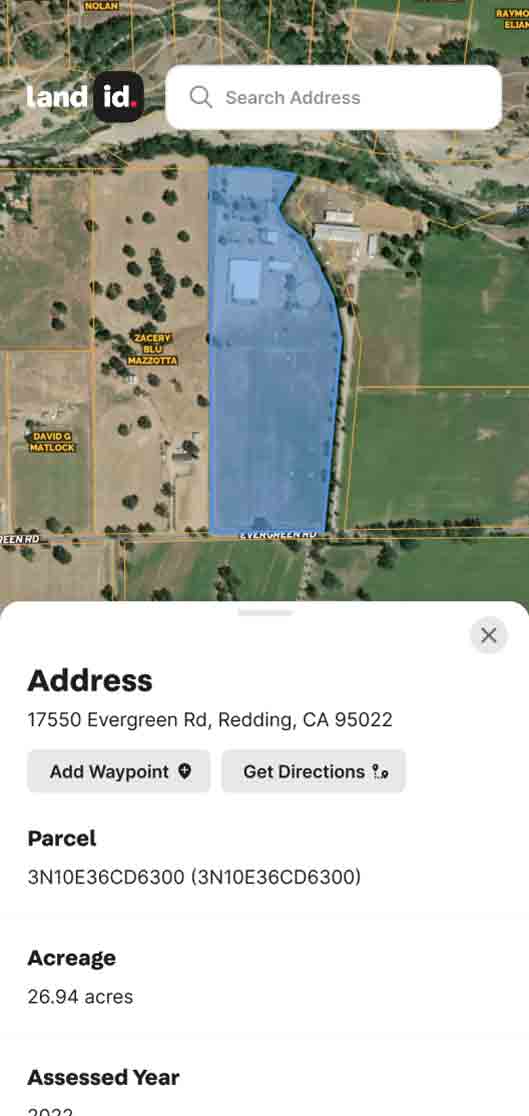
Search your top targets in Land id and open the parcel card. The spreadsheet got you to a short list. The parcel card decides who gets a pin:
- Ownership length
- Absentee status
- Whether a mortgage is on file
- Assessed value
One signal is interesting. Three on the same parcel means it earns a stop. No mortgage on file means you may be talking to a free-and-clear owner, who can consider an offer without clearing a loan. An absentee owner carrying land they don't use is a different call than a family living on the tract.
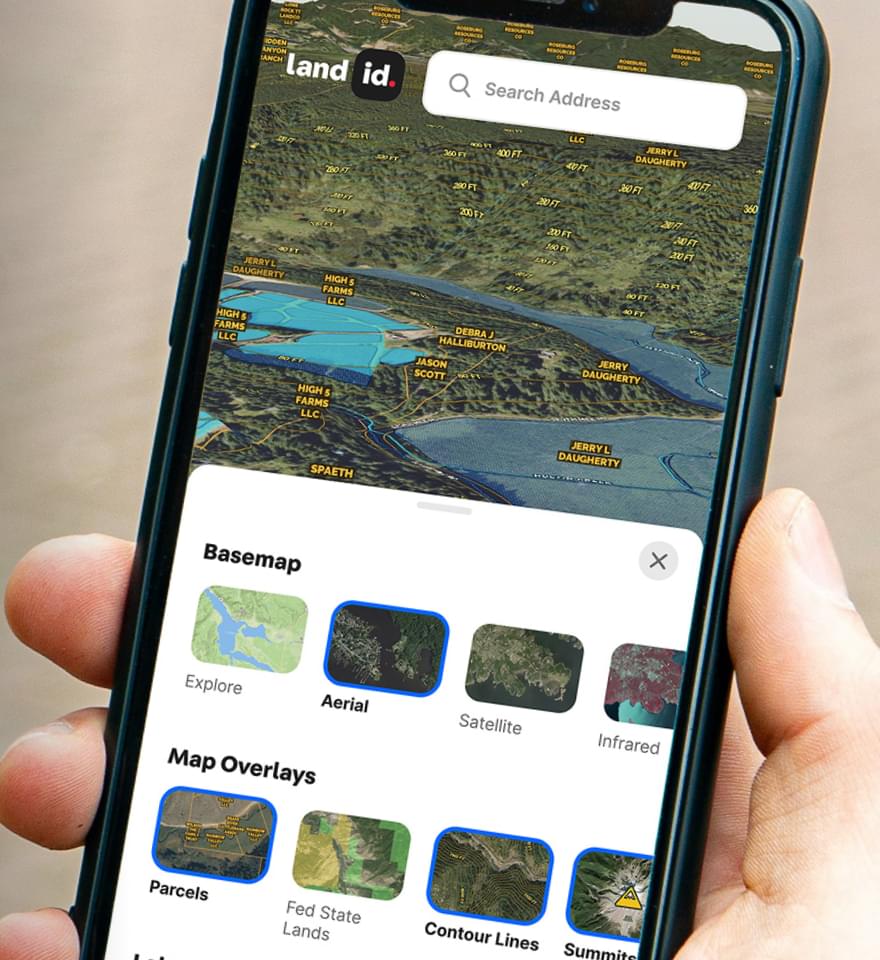
Then check the ground. In Land id, turn on the FEMA Floodplain Overlay, Wetlands, and Contour Lines. Look for floodplain across most of the parcel, wetlands on the ground you care about, or slope that eats the usable acres. Drop the clear nos. Keep anything uncertain for the drive.
While you’re researching the parcel card, click “Owner Portfolio” to see if the owner holds any other properties. Several nearby parcels under one name can be a better stop than a single leftover lot.
Land id doesn't include lis pendens, notices of default, or tax liens. If those records are part of how you buy, pull them elsewhere, then bring the addresses here and run this screen.
Related: Prospecting Part 1: Find Seller Leads, Prospecting Part 2: Find Off-Market Properties
4. Drive the Waypoints
Drop a waypoint on each keeper. Open the map on your phone, or in CarPlay, and drive the pins. Save the map for offline use if you're headed somewhere with thin service. The afternoon is a loop of addresses you already picked.
Check the high-res aerial before you roll so you know which stops deserve a walk. Look for open ground, a tired house, or a tract that now sits on a new road.
On the ground, confirm the data. The overgrown lawn, the boarded window, the vacant parcel that never made the MLS. Those signs matter more when you already know the owner, the hold period, and nearby sales. If a stop fails the eye test, take the next waypoint.
5. Call From the Curb
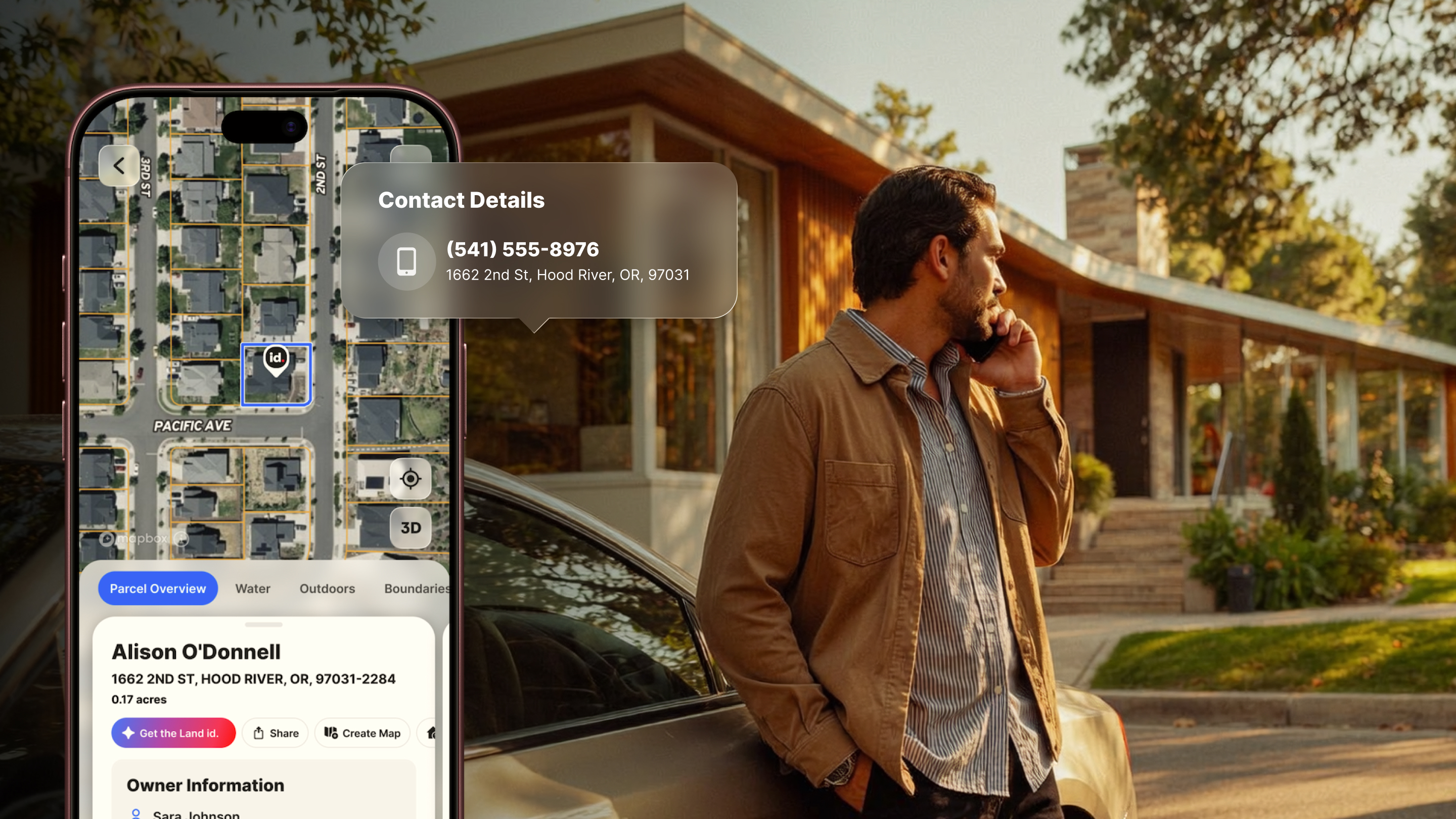
Open the parcel card and select Contact Information.
The owner's phone number appears, and you can copy it, share it, or call from Land id on desktop or mobile. You stay in the app instead of jumping to a skip-tracing tool to finish the loop.
Know the limits before you rely on a number.
- Contact information is available on Land id Pro and Pro Unlimited. It isn't available on a trial.
- It isn't available for every owner, because Land id can't bypass existing parcel or owner data redactions.
- It returns phone numbers only.
- Numbers may be outdated or incorrect. Confirm who you've reached before you treat one as good.
By the time you dial, you know who owns it, whether they live there, how long they've held it, what the county assessed, what similar ground sold for, and what you just saw.
Keep the call short. You buy in the area, you looked at this parcel, and you're interested if they are. Don't explain what the land could be worth, and don't send a report that prices it for them. If they want to talk, talk. If they don't, thank them and take the next pin.
Log the stop in your CRM or mailing tool so follow-up doesn't depend on memory. Plan on five to seven contacts over 60 to 90 days before you judge the outreach. Most owners will not say yes from the curb. The ones who might later should still have your name.
Related: The Ultimate Cold Outreach Playbook: Free Download
Cold Outreach Calling & Texting Best Practices
Before you call or text an owner, check the federal and state rules that apply to you, including Do Not Call and texting regulations. Talk to your brokerage or a legal professional if you're unsure.
Qualify the Property Before You Leave
With the modern-day driving for dollars method, most of your work can happen before you leave the desk.
Open a parcel, read the owner and the hold period, and check the FEMA Floodplain Overlay, Wetlands, and Contour Lines. Drop a waypoint on the keepers and save the map for the drive. That part is available on a free trial, no card required.
The two steps that turn the loop into prospect calls are found inside Land id Pro and Pro Unlimited. Comparable sales reports give you the ceiling. Contact information puts the owner's phone number on the parcel card, where it's available. Mailing lists are on every paid plan, for an additional fee. Contact information is not on a trial. Compare our plans and pricing to decide what's right for you.